
Should I Buy in Glendale or Peoria, AZ? A Homebuyer’s Mortgage Comparison for 2026
West Valley Comparison · Glendale vs. Peoria · 2026 Real Numbers
Both cities sit in the West Valley. Both are within easy reach of the Loop 101. Both have neighborhoods worth buying into. But the price gap, the housing stock, the school options, and what your mortgage payment looks like are genuinely different — and the right choice depends on your budget and your priorities, not just which city name you prefer. By Joe Hansen, NMLS# 217716 · Precision Mortgage, Peoria AZ · Updated September 2026
I work with buyers in both Glendale and Peoria regularly, and this question comes up more than people might expect — especially from buyers who are pre-approved and trying to figure out where to focus their search. The two cities share a border, share some school districts, and share easy freeway access. But they’re not the same market. Glendale offers more entry-level options and a wider range of housing types and price points. Peoria trends newer, larger, and more expensive — but with neighborhoods and amenities that justify the premium for the right buyer. This guide is designed to help you understand the real differences, not just in price but in what your mortgage actually looks like at each price point. $425K Glendale median single-family sale price, May 2026 $540K Peoria median single-family sale price, 2026 $115K Citywide median price gap between Peoria and Glendale

At a Glance: Glendale vs. Peoria in 2026
Before we get into the detail, here’s the honest city-level comparison based on current market data: Glendale, AZ More accessible entry point · Wider price range Peoria, AZ Newer stock · Higher median · Strong appreciation Median sale price Median sale price ~$425,000 ~$540,000 Price range (SFR) Price range (SFR) $285K (south) – $580K+ (north) $405K (south) – $700K+ (Vistancia) Days on market Days on market ~52 days ~51 days YoY price trend YoY price trend Flat to slightly down (−1% to −2%) Up ~0.9% YoY Effective property tax rate Effective property tax rate ~0.48% effective ~0.50–0.51% effective Primary school districts Primary school districts Glendale Union, Deer Valley (north), Dysart (west) Peoria Unified, Deer Valley (south portions) Typical housing era Typical housing era Mixed — 1960s through 2010s Mostly 1990s through 2020s; newer in north
Sources: Redfin, Zillow, Arizona Homes & Condos May 2026 market reports. Medians are citywide single-family figures and vary significantly by neighborhood and zip code. Confirm current pricing before offering.
The $115,000 Gap: What It Really Means for Your Mortgage
The $115,000 difference between Glendale’s and Peoria’s citywide medians isn’t just a number — it changes your monthly mortgage payment, your required down payment, and your total out-of-pocket costs at closing. Let’s make that concrete.
Using current conventional financing at approximately 6.5% for a well-qualified buyer with 5% down — a realistic scenario for many first-time and repeat buyers in the West Valley right now: Glendale, AZ $425,000 Purchase Down payment (5%) $21,250 Loan amount $403,750 P&I (6.5%, 30-yr) ~$2,552/mo PMI (~0.8%) ~$269/mo Property tax (~0.48%) ~$170/mo Homeowners insurance ~$155/mo Est. total monthly ~$3,146/mo Peoria, AZ $540,000 Purchase Down payment (5%) $27,000 Loan amount $513,000 P&I (6.5%, 30-yr) ~$3,244/mo PMI (~0.8%) ~$342/mo Property tax (~0.51%) ~$229/mo Homeowners insurance ~$165/mo Est. total monthly ~$3,980/mo
That’s roughly $834 per month more to buy at Peoria’s citywide median than at Glendale’s — over $10,000 per year. For buyers working with a specific budget, that gap can be the difference between comfortable and stretched. For buyers who have the budget for either, the question becomes what that $834/month buys you in terms of neighborhood, home size, and long-term appreciation. What If You Have a $400K or $500K Budget?
With a $400,000 budget: Glendale gives you solid options in central and north Glendale — established neighborhoods, 3-bedroom homes with yards, good access to Loop 101. In Peoria, $400K is entry-level, concentrated in south Peoria’s 85345 zip code where the median sits around $405,000. You’ll find homes there, but it’s the most limited part of Peoria’s market.
With a $500,000 budget: Glendale’s Arrowhead Ranch area (85308) has a median around $582,000 — you’re looking at the lower end of that premium neighborhood. In Peoria, $500K opens up significantly more inventory across the Arrowhead corridor (85382, median $441,000), central Peoria, and the better-established parts of Vistancia’s entry-level tier.
Neighborhoods Worth Knowing in Both Cities
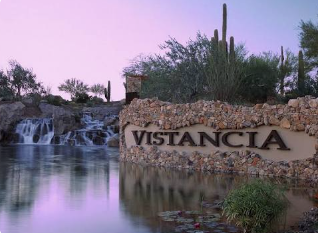
The citywide medians tell part of the story. But both Glendale and Peoria are large cities with wide internal variation — a zip code in north Glendale behaves very differently from one in south Glendale, and the same is true in Peoria. Here’s the breakdown by area:
Glendale Arrowhead Ranch (85308) Median ~$582,000 · Up 2.1% YoY Glendale’s premium pocket — master-planned around a golf course, upscale retailers nearby, and a resident profile that competes with North Peoria. Best appreciation story in the city.
Glendale North Glendale / Hillcrest Ranch (85310) Median ~$565,000 · Up 1.4% YoY Strong family area with Deer Valley Unified schools, newer construction, and easy 101 access. Increasingly competitive with comparable Peoria neighborhoods at similar prices.
Glendale Central Glendale (85304) Median ~$398,000 · Flat YoY The best value pocket in Glendale for buyers who want a solid, established neighborhood at an accessible price. Close to State Farm Stadium and the entertainment corridor on Loop 101.
Glendale Historic / Downtown Glendale (85301/85303) Median $305K–$345K · Entry-level: Most affordable entry into homeownership in the West Valley. Older homes — 1960s–1980s era — require more due diligence on condition. Renovation opportunity for the right buyer.
Peoria Arrowhead / Fletcher Heights (85382) Median ~$441,000 · Established Central Peoria’s sweet spot — Arrowhead Towne Center nearby, P83 district, mature trees, Loop 101 access. One of Peoria’s most consistent performers for owner-occupants.
Peoria Vistancia / North Peoria (85383) Median $600K–$700K+ · Premium Master-planned with resort amenities, golf, and newer construction. The top tier of Peoria’s market. Strong for buyers who want a premium lifestyle and are prepared for the premium price.
Peoria South Peoria (85345) Median ~$405,000 · Most accessible Peoria’s entry-level tier — older housing stock than north Peoria but still well-maintained. Good for buyers wanting a Peoria address at a more accessible price point.
Peoria Westwing / Lake Pleasant Pkwy (85383 west) Median $500K–$580K · Mountain views. Larger lots, mountain views, newer construction, easy 303 access. Popular with buyers who want more space without going as far as Surprise. Strong long-term hold.
Property Taxes: What You’ll Actually Pay
Both cities sit in Maricopa County and benefit from Arizona’s relatively low property tax environment — the state posted an effective rate of about 0.48% on owner-occupied housing as of mid-2026, near the low end nationally. But there are meaningful differences within both cities based on school district and location.
Glendale’s effective rate runs approximately 0.48% on a typical owner-occupied home — median annual taxes for Glendale homeowners with a mortgage run approximately $1,456 per year. However, this varies significantly by zone. Glendale’s combined all-in rates range from about 8.45 per $100 in the Deer Valley district area to about 12.42 in the Glendale Elementary #40 area. South and central Glendale — with Glendale Elementary or Cartwright school district — carry higher rates than north Glendale under Deer Valley Unified.
Peoria’s effective rate runs approximately 0.50–0.51% — homeowners in Peoria pay a median of approximately $2,161 per year on a home valued at $429,400. The higher annual bill relative to Glendale reflects both the higher home values and a slightly higher effective rate in some zones. Peoria Unified’s district rate and Deer Valley Unified (which covers parts of south Peoria) are both among the more moderate in the county. The Practical Tax Difference
At comparable price points, Glendale’s property tax bill is typically lower than Peoria’s — both because the effective rate is slightly lower and because homes cost less. On a $425,000 home in Glendale vs. a $425,000 home in Peoria, the annual tax difference is modest — roughly $50–$100/year depending on the specific district. The more significant tax difference comes from the price gap itself. A $540,000 Peoria home generates a higher annual tax bill than a $425,000 Glendale home simply because the assessed value is higher.
Schools: The Honest Comparison
School quality matters enormously to families — and it’s one of the areas where I think honest information serves buyers better than vague generalizations. Here’s what the data actually shows.
Peoria Unified School District
Peoria Unified is one of the largest school districts in Arizona with 44 schools and over 35,000 students. NeighborhoodScout rates Peoria Unified with a quality score of 7 out of 10 — meaningfully above state average. The district includes well-regarded schools like Liberty High School, Sunrise Mountain High School, and a range of strong elementary and middle schools. For families who prioritize school quality as a factor in their purchase decision, Peoria Unified is a genuine asset.
Glendale’s School Landscape — More Variable
Glendale is served by multiple school districts depending on where in the city you live — and this variability is meaningful. The Glendale Elementary District scores approximately 2 out of 10, and Glendale Union High School District scores approximately 3 out of 10 on NeighborhoodScout’s scale. However, these aggregate numbers mask significant variation within the city.
North Glendale under Deer Valley Unified — covering Arrowhead Ranch, Hillcrest Ranch, and surrounding areas — tells a very different story. Deer Valley Unified is one of the stronger districts in Maricopa County, and families buying in north Glendale under that district boundary are in a meaningfully different educational environment than those in central or south Glendale under Glendale Elementary or Glendale Union. The School District Rule for Glendale Buyers
If schools are a priority, the school district boundary matters more than the city name in Glendale. North Glendale zip codes served by Deer Valley Unified (85308, 85310) perform very differently from central and south Glendale zip codes served by Glendale Elementary or Glendale Union. Always verify the specific school boundary for any property you’re considering — and know that the premium for north Glendale homes partly reflects this school quality difference.
In Peoria, the school story is more consistent citywide — Peoria Unified covers most of the city, and the district’s overall performance is solid. Families who want reliable school quality without having to carefully map district boundaries tend to find Peoria’s uniformity an advantage.
Lifestyle and Amenities: What Each City Actually Offers
Beyond the numbers, the two cities do feel meaningfully different on the ground — and for buyers who are going to live in the home for 5, 10, or 20 years, that matters. Glendale’s entertainment corridor: State Farm Stadium, Gila River Arena (now Footprint Center west campus), Desert Diamond Arena, and the Westgate Entertainment District make Glendale one of the best sports and entertainment cities in the Valley.
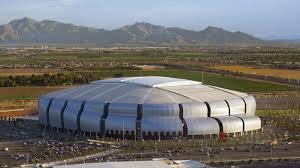
If proximity to major events matters to your lifestyle, nothing in Peoria competes with Glendale’s concentration of venues. Glendale Community College: For buyers with older students or those who value proximity to higher education, Glendale has significantly more college and university options within the city than Peoria does. Peoria’s P83 Entertainment District: The area around 83rd Avenue and Bell Road has developed into a solid dining, shopping, and entertainment hub for central Peoria — a walkable corridor that most of Peoria’s established neighborhoods can reach easily. Peoria’s Cactus League connection:
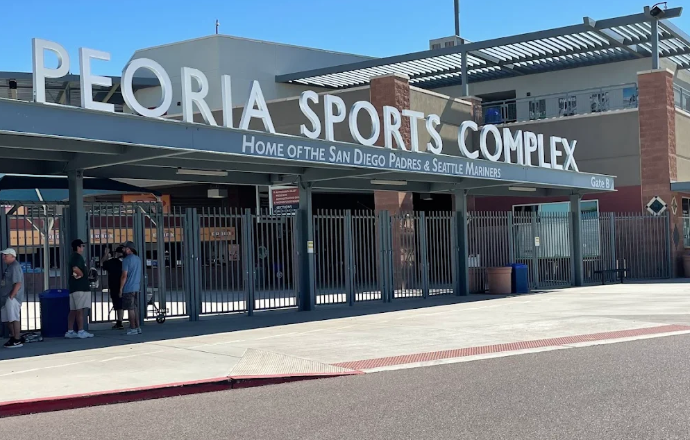
The Peoria Sports Complex hosts the Seattle Mariners and San Diego Padres for spring training — a genuinely fun part of West Valley life from February through March, and a community asset that residents actively use. Lake Pleasant: Just northwest of Peoria, Lake Pleasant Regional Park gives Peoria residents access to boating, kayaking, fishing, and hiking that no Glendale neighborhood can match for proximity. For buyers who prioritize outdoor recreation, this is a real difference-maker. Commute patterns: Mean one-way commute times are nearly identical — about 28.5 minutes for Peoria and 27.7 minutes for Glendale. Loop 101 access makes both cities practical for commuters heading toward Scottsdale, the East Valley, or downtown Phoenix.
The Mortgage Picture at Each Budget Level
Here’s how the financing looks at two specific budget points — the most common ranges I see from buyers shopping between these two cities.
At a $400,000 Budget
In Glendale, $400,000 is a solid mid-market budget. You’re buying in central Glendale (85304) near the median, with good inventory and real choices. In Peoria, $400,000 is entry-level — you’re in south Peoria (85345) with limited options and more competition from other budget-constrained buyers.
From a financing standpoint, the payment looks like this with 5% down, conventional at 6.5%: approximately $2,960/month total including taxes, insurance, and PMI. With FHA at a slightly lower rate, you’d be close to $2,850. FHA loans in Arizona make sense for buyers in this range with credit scores under 680 — the mortgage insurance structure often produces a lower combined payment than conventional below that threshold.
At a $500,000 Budget
This is where both cities become genuinely competitive with each other. At $500,000, you’re buying near the top of Glendale’s central market and right at mid-market for Peoria’s central Arrowhead corridor (85382, median $441,000). The inventory in both cities at this price range is meaningful, and you have real choices.
Monthly payment with 5% down, conventional: approximately $3,710/month total. With 10% down, you eliminate the higher PMI burden — monthly comes down to roughly $3,400 and your concession limit for seller credits jumps from 3% to 6% of the purchase price. If you’re targeting $500K, worth modeling whether stretching to 10% down makes strategic sense. A pre-approval conversation is where we run those scenarios side by side with real numbers. Down Payment Assistance Works in Both Cities
If down payment is a limiting factor, Arizona’s down payment assistance programs — including the Home Plus program and Chenoa Fund — work in both Glendale and Peoria for qualified buyers. These programs can cover some or all of the required down payment, which means the $400K or $500K conversation doesn’t require $20,000–$25,000 saved before you start seriously looking. Eligibility is based on income limits and the loan program, not which city the home is in.
Which City Is Right for You?
This isn’t a question with a universal answer. But based on what I see from buyers navigating this decision regularly, here’s how to think about it: Choose Glendale if: Your budget is under $450,000 and you want real choices rather than entry-level scraps. You prioritize proximity to sports and entertainment. You’re buying in north Glendale (85308/85310) where school quality is solid and the value proposition versus comparable Peoria neighborhoods is genuinely compelling. You’re an investor — Glendale’s lower acquisition costs relative to rents create cash flow dynamics that are harder to achieve in Peoria. Choose Peoria if: Your budget is $450,000 or above and you want the wider selection Peoria’s depth of inventory provides. School consistency matters to you and you don’t want to carefully map district boundaries. You prioritize newer construction, HOA amenities, and the community feel of master-planned neighborhoods. Lake Pleasant and outdoor recreation are part of your lifestyle. You’re planning a long-term hold and want a market with a track record of steady appreciation. The Honest Middle Ground
For buyers with a $475,000–$525,000 budget, the honest answer is: look in both cities. North Glendale’s Arrowhead Ranch and Hillcrest Ranch at this price point offer genuine value that competes directly with comparable Peoria neighborhoods. The school districts overlap (Deer Valley Unified serves parts of both cities). The commute times are nearly identical. The lifestyle differences come down to personal preference — and sometimes the best deal in that price range is on the Glendale side of the street.
Want to See What Your Actual Payment Looks Like in Each City?
Give me your budget, your down payment, and your credit profile and I’ll run the real numbers — Glendale vs. Peoria, multiple loan programs, side by side. That’s the conversation that helps you actually decide, not just compare medians online.(480) 239-7766 — Call JoeStart Pre-Approval →
Frequently Asked Questions
Q Is Glendale cheaper than Peoria right now? As of 2026, Glendale’s citywide median sale price is approximately $430,000 and Peoria’s is approximately $535,000–$540,000 — a gap of roughly $105,000–$115,000. At the city level, yes, Glendale is meaningfully more affordable. However, north Glendale zip codes (Arrowhead Ranch, Hillcrest Ranch) have medians of $565,000–$582,000, which is comparable to or above mid-Peoria pricing. The gap depends heavily on which part of each city you’re comparing.
Q Are the schools better in Peoria or Glendale? Overall, Peoria Unified has a stronger and more consistent district-wide rating than Glendale’s primary school districts. However, buyers purchasing in north Glendale under Deer Valley Unified — which covers Arrowhead Ranch, Hillcrest Ranch, and surrounding areas — are in a district that competes well with Peoria Unified. The school picture in Glendale is much more variable by location than in Peoria, where Peoria Unified covers most of the city with consistent quality. If schools are a priority and you’re buying in Glendale, verify the specific district boundary for the property, not just the city.
Q How much more is the mortgage payment in Peoria vs. Glendale? Using citywide medians with 5% down and a conventional 6.5% rate, the total monthly payment (including PMI, taxes, and insurance) at Peoria’s $540,000 median is approximately $3,980/month vs. approximately $3,146/month at Glendale’s $425,000 median — a difference of about $834/month. At comparable price points within each city, the payment difference is much smaller — it’s primarily driven by the $115,000 gap in typical prices, not a structural difference in how mortgages work in each location.
Q Which city has lower property taxes? Glendale’s effective property tax rate is slightly lower — approximately 0.48% vs. Peoria’s 0.50–0.51%. In dollar terms, Glendale homeowners pay a median of around $1,456/year vs. approximately $2,161/year in Peoria — but much of that difference is because Peoria homes cost more on average. At the same purchase price, the annual tax difference between the two cities is modest, typically under $100–$150/year depending on the specific school district zone within each city.
Q Can I get first-time buyer assistance in both cities? Yes. Arizona’s major down payment assistance programs — including Home Plus and the Chenoa Fund — are available statewide and work in both Glendale and Peoria for qualified buyers. Eligibility is based on income limits, loan type, and borrower qualifications — not which city the home is in. See our first-time buyer loan options here — the programs available are the same whether you’re buying in Glendale or Peoria.
Q Is north Glendale comparable to Peoria? In many ways, yes. North Glendale’s Arrowhead Ranch (85308) and Hillcrest Ranch (85310) areas share Deer Valley Unified schools with parts of south Peoria, offer master-planned community amenities, and have home prices in the $565,000–$582,000 range — directly competitive with mid-Peoria pricing. For buyers whose search area is the Arrowhead/101 corridor, the city border between Glendale and Peoria matters far less than the specific neighborhood and school zone.
Q Which city is better for long-term home value appreciation? Peoria’s citywide values were up approximately 0.9% year over year through mid-2026, while Glendale’s were flat to slightly down (−1% to −2% depending on the data source). North Glendale’s Arrowhead Ranch bucked that trend with +2.1% appreciation — outperforming most of Peoria’s market. The broader story: Peoria’s overall trajectory has been stronger in recent years, particularly in the Arrowhead corridor and north Peoria. But individual neighborhoods matter more than city-level averages, and a well-chosen Glendale home in a strong pocket can outperform a median-positioned Peoria purchase.
Helpful Resources
- Mortgage Pre-Approval — Peoria, AZ
- First-Time Homebuyer Loans — West Valley, AZ
- FHA Loans in Arizona — Low Down Payment Options
- Who Has the Lowest Mortgage Rates in Peoria, AZ?
- #1 Mortgage Broker in Peoria for 2026 — Joe Hansen
- Maricopa County Tax Levy and Rates — Official Source
Joe Hansen Mortgage Loan Officer & Broker · NMLS# 217716 · AZ LO0911403
Joe Hansen is a licensed mortgage broker at Precision Mortgage in Peoria, AZ — named the #1 Mortgage Broker in Peoria for 2026. With over 20 years of experience helping buyers across Glendale, Peoria, Surprise, and the West Valley, he specializes in helping clients understand the real financial picture of their purchase before they commit — not after. Whether you’re buying in Glendale or Peoria, the mortgage side of the decision deserves the same attention as the real estate side.joehansenmortgage.com(480) 239-7766Get Pre-Approved
Precision Mortgage, Inc. | 14155 N 83rd Ave Ste 125, Peoria, AZ 85381 | NMLS# 217716 | AZ LO0911403. This content is for informational purposes only and does not constitute a loan commitment or guarantee of terms. Home price data sourced from Redfin, Zillow, and Arizona Homes & Condos market reports as of May–September 2026; figures are citywide medians and vary by neighborhood, zip code, and property type. Property tax rates are estimates based on Maricopa County published rates and may vary by school district, parcel, and exemption status. Payment examples are illustrative only and assume conventional 30-year fixed financing at 6.5% with 5% down; actual payments vary by credit profile, loan type, and current market rates. All loans subject to credit and income qualification. Contact a licensed loan officer for a personalized rate and payment scenario.
