
First-Time Home Buyer Loans in Peoria, AZ
Buying your first home is one of the biggest financial decisions you'll ever make. The good news is that there are loan programs, down payment assistance options, and local expertise specifically designed to help first-time buyers in Peoria and the West Valley get into a home — often with far less out of pocket than you'd expect.
What First-Time Buyers in Peoria Actually Need to Know
Most first-time buyers come into the process with the same concerns: they're not sure if their credit is good enough, they're worried about saving for a down payment, and they don't fully understand the difference between the loan programs they've heard about. All of those concerns are legitimate — and all of them are solvable.
The reality is that Peoria and the broader West Valley are accessible markets for first-time buyers who are prepared. There are programs with down payments as low as 3% to 3.5%, Arizona-specific down payment assistance that can cover that gap entirely for eligible buyers, and loan programs designed specifically for buyers who don't have a 20% down payment or a perfect credit file.
As a licensed mortgage broker in Peoria, AZ, with over 20 years of experience, I've helped hundreds of first-time buyers navigate this process. My job is to compare programs across multiple lenders, identify the best fit for your specific situation, and walk you through every step from application to closing — clearly, without the industry jargon.
You May Qualify Even If You Think You Don't
Many first-time buyers assume they need more than they actually do. Here's what's often possible:
- ✓ Down payment as low as 3% to 3.5%
- ✓ Down payment assistance programs available in Arizona
- ✓ Credit scores starting at 580 on FHA loans
- ✓ Gift funds allowed for down payment on most programs
- ✓ Seller concessions can cover closing costs
- ✓ Self-employed buyers have real options too
First-Time Home Buyer Loan Programs Available in Peoria, AZ

First-Time Homebuyers in Fletcher Heights
Fletcher Heights is one of Peoria's most established and sought-after family communities, making it a popular choice for first-time homebuyers looking for a balance of affordability, convenience, and neighborhood amenities. Located near Loop 101, Fletcher Heights offers easy access to major employment centers throughout the West Valley while still providing parks, walking trails, and highly rated schools. Many buyers are attracted to the area's larger lot sizes, mature landscaping, and established neighborhoods that can be difficult to find in newer developments.
For first-time buyers, Fletcher Heights often provides opportunities to purchase a single-family home at a price point that is more attainable than some of Peoria's newer master-planned communities. The neighborhood is conveniently located near shopping, restaurants, and entertainment options along Bell Road and Lake Pleasant Parkway, allowing homeowners to enjoy the benefits of North Peoria without sacrificing convenience. Buyers who want a traditional suburban neighborhood with strong long-term appeal frequently place Fletcher Heights at the top of their search list.
Most Common for First-Time Buyers
FHA Loan – 3.5% Down
FHA loans are the most widely used mortgage program for first-time buyers in Arizona, and for good reason. They allow down payments as low as 3.5% with a credit score of 580 or above, and have more flexible debt-to-income guidelines than conventional programs. If your credit is still in the building phase or you've had a past financial setback, FHA is often the most accessible entry point into homeownership. The tradeoff is mortgage insurance — FHA requires both an upfront premium and an annual premium that stays in place for the life of the loan in most cases.
Fannie Mae HomeReady – 3% Down
HomeReady is a conventional loan program designed for low-to moderate-income buyers, including first-time buyers. It requires a minimum 620 credit score and just 3% down, and allows income from non-borrowing household members to be considered in qualification, which can make a real difference for buyers with family support. Mortgage insurance is required when putting less than 20% down, but unlike FHA, it can be removed once you reach 20% equity. HomeReady also offers reduced mortgage insurance rates compared to standard conventional PMI for qualifying income levels.
Freddie Mac Home Possible – 3% Down
Home Possible is Freddie Mac's equivalent to HomeReady — a 3% down conventional loan for buyers at or below area median income limits. It has similar credit and income requirements, flexible down payment sourcing rules, and cancelable mortgage insurance. For first-time buyers who meet the income guidelines, both HomeReady and Home Possible are worth comparing against FHA to determine which produces the most favorable monthly payment and total loan cost for your situation.
Fannie Mae HomePath – Foreclosure Properties
HomePath is a specialized Fannie Mae program for purchasing Fannie Mae-owned foreclosure properties. It allows as little as 3% down, does not require an appraisal or mortgage insurance, and can be a strong option for buyers who are open to purchasing a bank-owned property. HomePath properties are listed at FannieMae.com and are available throughout the Phoenix metro area. If you're open to a HomePath home, it can be one of the most cost-effective ways to enter the market as a first-time buyer.
Down Payment Assistance Programs for Arizona First-Time Buyers
The down payment is the single biggest barrier most first-time buyers face. Arizona has a strong landscape of down payment assistance programs designed specifically to address that gap — and many buyers who assume they don't qualify are surprised to find out they do. Here's what's available:
Arizona Statewide Program
Home Plus Arizona
Home Plus is one of Arizona's most widely used down payment assistance programs. It provides a grant — not a loan — of up to 5% of the loan amount to cover your down payment and closing costs. Because it's structured as a grant with no repayment requirement when program guidelines are met, it genuinely reduces the amount of cash you need to bring to the table. Home Plus is available on FHA, conventional, VA, and USDA loans, and is accessible to both first-time and repeat buyers who meet the income and credit requirements. For many buyers in Peoria, this program is the difference between being ready to buy now versus waiting another year or two to save.
Chenoa Fund
The Chenoa Fund is a national down payment assistance program that pairs with FHA loans to cover the 3.5% down payment requirement. It's structured as a soft second mortgage — meaning if you make your payments on time for a defined period, the assistance can be forgiven entirely. For buyers using FHA financing who don't have the down payment saved, Chenoa is worth understanding closely. There are income guidelines and specific qualifying criteria, and the program structure can vary, so it's important to go through a lender who understands exactly how it works and what it costs over the life of the loan.
Other Arizona DPA Options
Beyond Home Plus and Chenoa, there are additional assistance options worth knowing about — including programs through the Arizona Industrial Development Authority, local municipality grants in Peoria and surrounding cities, and employer-assisted housing programs offered by certain large employers in the West Valley. Availability and funding levels on these programs change, and not all lenders are set up to work with all of them. Part of my job as a broker is knowing what's currently funded and accessible for buyers in this market.
Important note on DPA programs: Down payment assistance is not free money with no strings attached. Most programs come with income limits, geographic restrictions, minimum credit score requirements, and in some cases, slightly higher interest rates or second liens. The net benefit is still significant for most buyers — but it's worth understanding the full picture before choosing a program. I'll show you a side-by-side comparison of your total cost with and without assistance so you can make an informed decision.
Buy A Home Near Peoria Sports Complex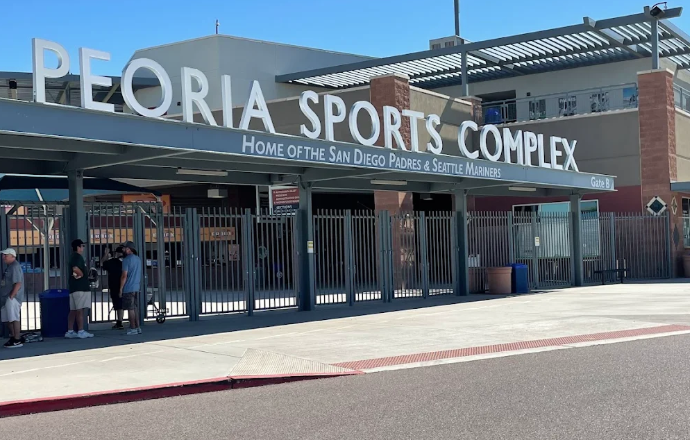
Buying your first home near the Peoria Sports Complex offers more than just homeownership—it puts you in the heart of one of the West Valley’s most active entertainment areas. Home to Major League Baseball Spring Training for the Seattle Mariners and San Diego Padres, the Peoria Sports Complex brings year-round energy to the community. First-time homebuyers are often drawn to the area's convenient access to shopping, dining, and nightlife, with popular destinations like P83 Entertainment District offering restaurants, sports bars, live music, and family-friendly events. Whether you're catching a spring training game, meeting friends for dinner, or enjoying a night out without driving across the Valley, living near the Peoria Sports Complex provides a lifestyle that combines affordability, convenience, and entertainment in one of Arizona's most desirable communities.
First-Time Homebuyers Near Luke Air Force Base
Peoria is a popular choice for military families and civilian employees working at Luke Air Force Base. Communities throughout North Peoria, Fletcher Heights, and nearby Surprise offer convenient commuting access while still providing larger homes and neighborhoods than many buyers find closer to central Phoenix. First-time buyers with military service may qualify for VA financing, which can allow for zero down payment and competitive interest rates. Even buyers who are not eligible for VA loans often find Peoria to be one of the best values in the West Valley due to its combination of location, amenities, and long-term growth.
Buying Your First Home in North Peoria and Vistancia
Many first-time homebuyers in Peoria are surprised to learn that North Peoria offers a wide range of housing options beyond luxury homes. Communities like Vistancia, Camino a Lago, and areas along Loop 303 provide access to newer construction homes, community amenities, parks, hiking trails, and highly rated schools. Builders in these areas occasionally offer incentives such as closing cost assistance or interest rate buydowns that can make homeownership more affordable for first-time buyers. If you're considering a new construction home, it's important to get pre-approved before visiting model homes, so you understand your financing options and budget before negotiating with the builder.
Getting Your Credit Score Where It Needs to Be
Your credit score is one of the most direct factors in determining which loan programs you qualify for and what interest rate you receive. The good news is that credit is not fixed — it responds to specific actions, and most buyers can make meaningful improvements within three to six months when they focus on the right things.
Here's how mortgage lenders look at your credit score and what each range means for your options as a first-time buyer in Peoria:
The most effective ways to improve your score before applying:
- Pay down credit card balances. Your credit utilization — the ratio of your balance to your credit limit — has an immediate impact on your score. Get every card below 30% of its limit, and ideally below 10% if possible. This single action often produces the fastest score increase.
- Don't close old accounts. The length of your credit history matters. Closing an old card you're not using can actually lower your score by reducing your available credit and shortening your history. Leave those accounts open, even if you're not actively using them.
- Don't open new credit lines. Every new application creates a hard inquiry on your report. In the six months before applying for a mortgage, avoid opening new credit cards, financing furniture, or applying for any new credit. New accounts also lower your average account age.
- Dispute errors on your credit report. Pull your reports from all three bureaus — Equifax, Experian, and TransUnion — and review them carefully. Errors are more common than most people expect, and a successfully disputed inaccuracy can produce a meaningful score improvement quickly.
- Bring all accounts current. A single missed payment can drop your score significantly. If you have any past-due accounts, bring them current immediately. The impact of a late payment diminishes over time, but the current status matters right now.
- Ask about rapid rescore. If you're close to a qualifying threshold, a rapid rescore through your lender can reflect recent positive changes — like paying down a balance — within days rather than waiting for the next billing cycle to update. It's not available to consumers directly, but I can initiate this process when it makes sense.
If you're not quite where you need to be on credit, don't wait to have the conversation. I'd rather talk to you six months before you're ready than have you go through a denial that could have been avoided. A 15-minute call now can give you a specific roadmap for where to focus your energy.
FHA vs. Conventional: Which Is Right for a First-Time Buyer?
This is the most common question I hear from first-time buyers, and the honest answer is: it depends on your credit score and how long you plan to stay in the home. Here's a direct side-by-side comparison of the two most common paths:
| Factor | FHA Loan | Conventional (HomeReady / Home Possible) |
|---|---|---|
| Minimum Credit Score | 580 (3.5% down) / 500 (10% down) | 620 minimum |
| Minimum Down Payment | 3.5% with 580+ score | 3% for qualifying programs |
| Mortgage Insurance | Upfront MIP (1.75%) + annual MIP for life of loan in most cases | PMI required under 20% down; cancelable at 20% equity |
| Debt-to-Income Ratio | Up to 57% with strong compensating factors | Up to 45–50% depending on lender and program |
| Gift Funds for Down Payment | Allowed — 100% of down payment can be gifted | Allowed with proper documentation |
| Property Condition Requirements | Stricter — FHA appraiser flags health/safety issues | More flexible — standard appraisal requirements |
| Best For | Buyers with credit below 680 or higher DTI | Buyers with 620+ credit who want removable PMI |
The mortgage insurance difference is the critical long-term cost factor. On an FHA loan, you pay MIP for the life of the loan — the only way to eliminate it is to refinance into a conventional loan once you have 20% equity. On a conventional loan, PMI disappears automatically. For a buyer with a 650 credit score who plans to stay in the home for 10+ years, that difference in insurance costs can add up to tens of thousands of dollars. I run this analysis for every buyer so you can see the actual dollar comparison — not just a general explanation.
For more details, review the full breakdown on FHA loans in Arizona and conventional loan options in Peoria.
The Step-by-Step Process: Buying Your First Home in Peoria, AZ
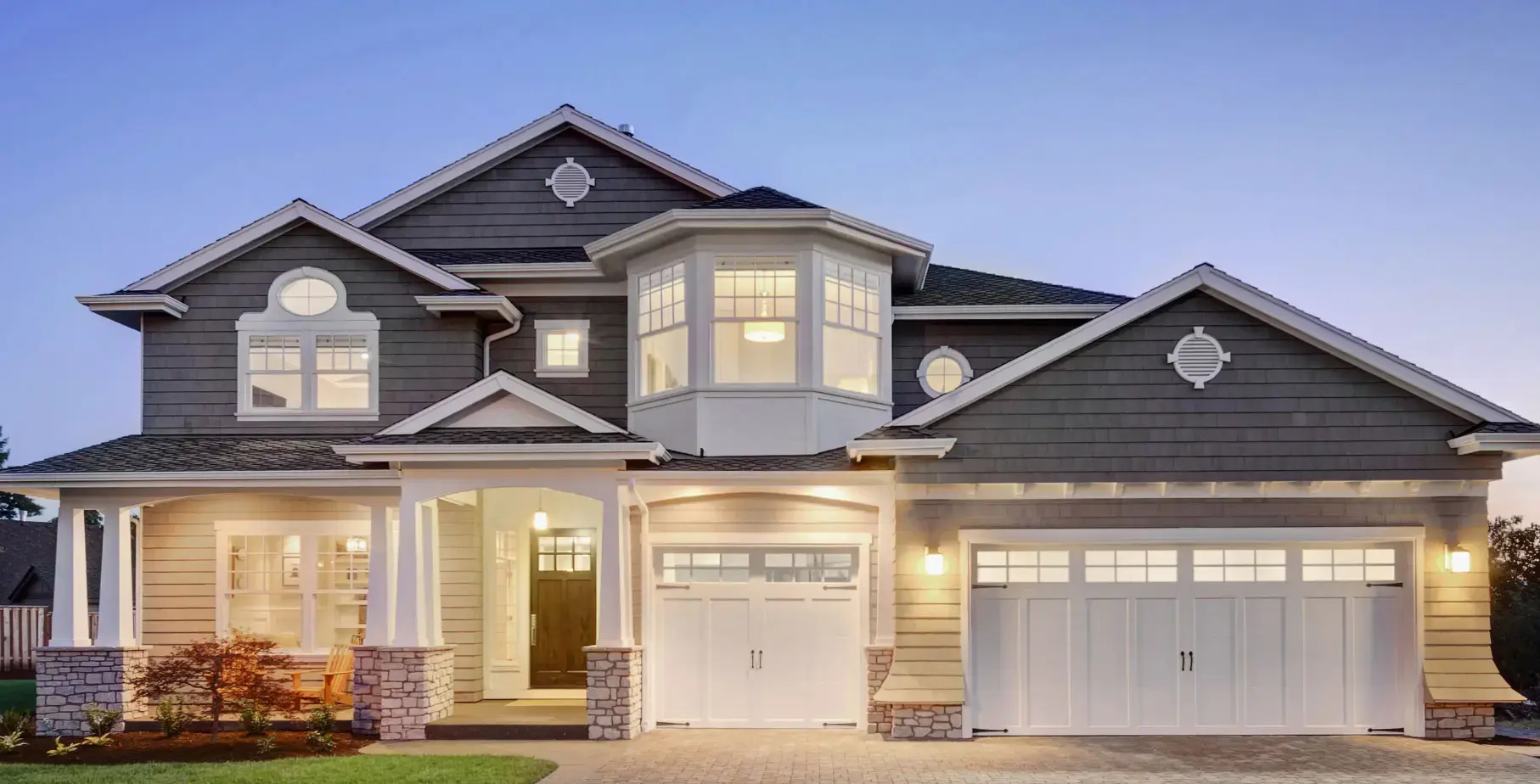 The home buying process has more moving parts than most first-time buyers expect — but when you understand the sequence, it's straightforward. Here's exactly what the process looks like from start to close:
Review Your Financial Picture
Before anything else, you need a clear picture of where you stand: your credit scores across all three bureaus, your monthly income, your existing debt payments, and what you have available for a down payment and closing costs. This doesn't require a formal application — it's a conversation. I'll look at your numbers and give you an honest assessment of which programs are realistically available to you right now, and what — if anything — needs to happen before you apply.
Get Pre-Approved — Not Just Pre-Qualified
Pre-qualification is a rough estimate based on what you tell a lender. Pre-approval is a verified commitment based on your actual documentation — credit report pulled, income verified, assets reviewed. In today's West Valley market, sellers expect pre-approval letters. Without one, your offer won't be taken seriously, and in a competitive situation, it may not be considered at all. A mortgage pre-approval in Peoria, AZ, tells you exactly what you can afford, which loan program you're using, and what your estimated monthly payment and closing costs look like — before you ever tour a home.
Select a Real Estate Agent and Start Shopping
With your pre-approval in hand, you're ready to work with a buyer's agent and tour homes. Your pre-approval establishes your price ceiling — and your agent will help you find homes within that range that meet your needs. In Peoria and the West Valley, a good buyer's agent is an important partner in the process. I'm happy to provide referrals to agents I've worked with and trust if you don't already have someone in mind.
Make an Offer and Go Under Contract
When you find the right home, your agent will submit a purchase offer. If accepted, you'll sign a purchase contract and put down earnest money — typically 1% of the purchase price — to secure the transaction. The contract will include an inspection contingency and a financing contingency that protect you during the due diligence period. Once you're under contract, the mortgage process begins in earnest.
Home Inspection and Appraisal
You'll hire a licensed home inspector to evaluate the condition of the property. For most buyers, this is a non-negotiable step — the inspection report tells you what you're actually buying. Separately, your lender will order an appraisal to confirm the home's market value supports the loan amount. FHA appraisals also assess basic property condition. If either the inspection or appraisal raises issues, you have options — negotiate repairs, adjust the purchase price, or in some cases, walk away within your contingency period.
Underwriting and Loan Approval
Your complete file goes to the lender's underwriting department for final review. The underwriter verifies every piece of documentation, confirms the property appraisal, and issues either a loan approval, an approval with conditions, or a suspension requiring additional documentation. Most conditions are routine — updated pay stubs, a letter of explanation for something on the credit report, and verification of a deposit. I stay on top of these requests and respond quickly to keep your file moving. The goal is a clear-to-close as efficiently as possible.
Closing Day
Once you receive a clear-to-close, closing is typically scheduled within a few days. You'll receive a final Closing Disclosure at least three business days before closing, showing every cost and credit associated with the transaction. Review it carefully — I'll walk through it with you to make sure everything looks right. On closing day, you'll sign the loan documents, pay any remaining closing costs, and receive the keys. The home is yours.
First-Time Buyer and Self-Employed? There Are Still Options.
Being a first-time buyer is straightforward when you have W-2 income — lenders verify your pay stubs and move on. But a significant number of buyers in the West Valley are self-employed: business owners, contractors, freelancers, and 1099 workers who earn good income but whose tax returns don't tell the full story.
If that's your situation, you're not out of options. Bank statement loan programs, conventional financing using tax returns with proper income analysis, and in some cases, asset-based qualification are all paths worth exploring. The documentation requirements are more involved, and working with a lender who understands how to structure self-employed files correctly makes a significant difference in outcome.
For a full explanation of what's available, take a look at the self-employed mortgage loan programs available in Peoria, AZ.
Frequently Asked Questions: First-Time Home Buyers in Peoria, AZ
How much money do I actually need to buy a home in Peoria, AZ?
The minimum out-of-pocket requirement depends on the loan program. FHA requires 3.5% down plus closing costs — on a $350,000 home, that's roughly $12,250 for the down payment plus $6,000–$9,000 in closing costs, though seller concessions can cover part of the closing costs. With a down payment assistance program like Home Plus, the down payment portion can be covered, leaving only closing costs. The practical minimum for most buyers — even with assistance — is having a few thousand dollars in reserve for earnest money, inspection fees, and any costs not covered by the seller or DPA program.
Can I use gift money for my down payment?
Yes. FHA loans allow 100% of the down payment to come from a documented gift from a family member. Conventional programs also allow gift funds, though documentation requirements apply — the donor will typically need to provide a signed gift letter confirming the funds are not a loan. Lenders will source and season any large deposits in your account, so if you're planning to receive a gift, it's worth discussing the timing with me before the funds are transferred.
What's the income limit for down payment assistance programs in Arizona?
Income limits vary by program and are typically set as a percentage of the area median income for Maricopa County, adjusted for household size. Home Plus and Chenoa both have income guidelines that are updated periodically. Many buyers assume they earn too much to qualify and are surprised to find they fall within the limits. The only way to know for certain is to run your specific income against current program guidelines — which I do as part of the pre-approval process at no cost.
Do I have to be a first-time buyer to use these programs?
Not always. The FHA loan program has no first-time buyer requirement — it's available to any qualified borrower purchasing a primary residence. HomeReady and Home Possible are also available to repeat buyers who meet the income limits. Some down payment assistance programs, like Home Plus are available to both first-time and repeat buyers. True first-time buyer restrictions are less common than most people assume.
How long does it take to go from application to closing?
For most first-time buyers with complete documentation and no significant underwriting issues, 30 days from application to closing is a realistic target. Some transactions close in 21 days when documentation is clean and the lender moves efficiently. Government-backed programs like FHA may take slightly longer if there are property condition issues flagged during appraisal. Getting your documentation organized upfront — before we submit — is the single most effective way to keep the timeline short.
Should I get pre-approved before I start looking at homes?
Absolutely. Pre-approval first is not optional in this market — it's the only way to know with confidence what you can afford and to make a credible offer when you find the right home. Sellers and listing agents in Peoria expect to see a current pre-approval letter with any offer. Going under contract without one puts you at a significant disadvantage. The pre-approval process typically takes a few days once your documentation is submitted, so there's no reason to wait until you've found a house.
Ready to Take the First Step Toward Homeownership in Peoria?
Whether you're ready to apply today or just starting to figure out what's possible, the first conversation costs you nothing. I'll review your specific situation, identify which programs you qualify for, and give you a clear, honest picture of what buying a home in Peoria looks like for you.
Joe Hansen | NMLS# 217716 | AZ LO0911403 | Precision Mortgage
14155 N 83rd Ave Ste 125, Peoria, AZ 85381 | joehansenmortgage.com
