
Should I Buy a Condo or Townhouse in Arizona? What to Know Before You Make an Offer
Should I Buy a Condo or Townhouse in Arizona? | Joe Mortgage
The short answer: a condo and a townhouse can look exactly alike. What separates them is how the property is legally owned, and that decides which loan programs you can use.

A townhouse is usually fee-simple, meaning you own your home and the lot under it. A condo means you own a unit plus a share of the common elements. For a condo, the lender also has to approve the project, not just you and the unit.
Those two facts alone make a huge difference between the two. It can decide which loan you qualify for, how fast you close, and how easy the home is to sell years from now. Keep reading to see why, before you write an offer.
I’m Joe Hansen, a loan officer in Peoria with more than 24 years of Arizona mortgage experience. Over the years I’ve learned that the most expensive surprises in a purchase aren’t about credit scores. They’re about a property that turns out to be something other than what everyone assumed. This guide is for first-time buyers and for the realtors who guide them.
Condo vs. townhouse: what’s the legal difference?
Picture a two-story attached home in Glendale with its own front door, a small patio, and a garage. It might be a townhouse. It might be a condominium. You can’t tell by walking through it.
With a traditional fee-simple townhouse, you own the home and the individual lot beneath it, much like a detached house. You may still pay HOA dues for landscaping, amenities, or some exterior upkeep, but the lot is yours. Lenders generally treat these as attached single-family homes or homes in a planned unit development (PUD).
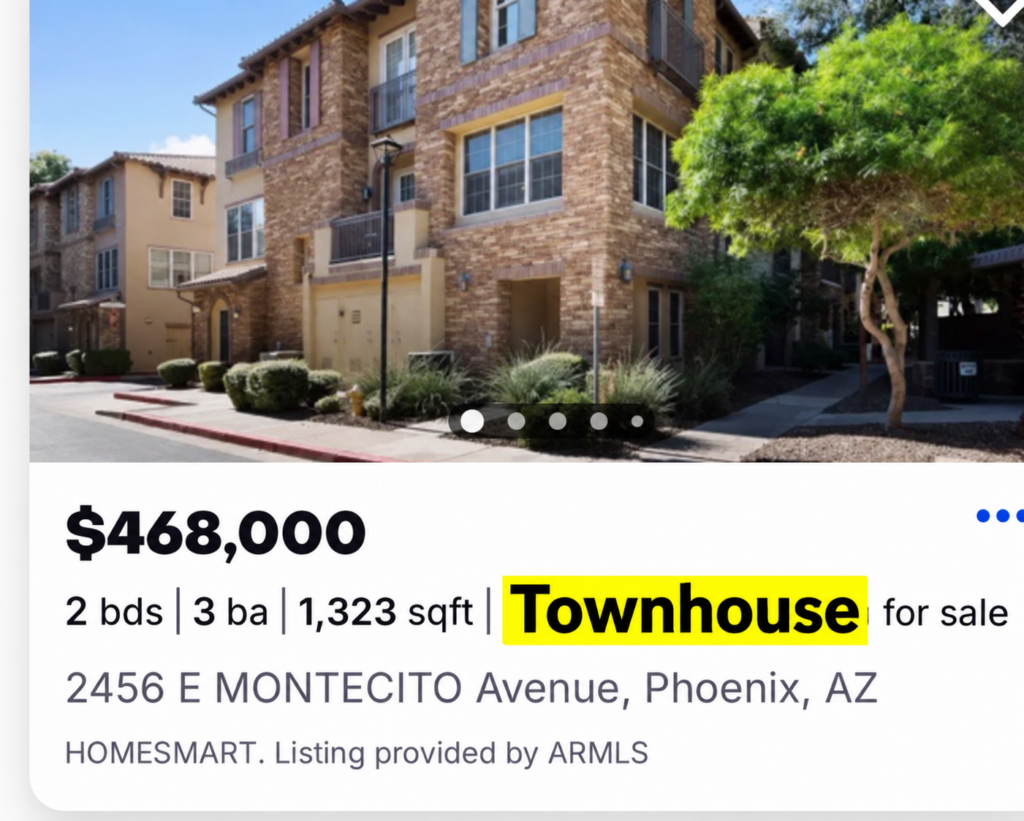
With a condominium, you own a defined unit and an undivided interest in the common elements, which can include land, roofs, and exterior walls. Arizona’s condominium law defines it by that ownership structure, so a condo can be a high-rise apartment, a two-story attached home, or even a detached house.
A condo is a legal structure, not an architectural style. That one sentence explains most of the trouble I see.
Why does it matter for your mortgage?
When a home is a fee-simple townhouse, the lender mostly looks at you and the property. When it’s a condo, the lender also looks at the health of the whole association: reserves, master insurance, pending litigation, deferred maintenance, special assessments, and how many owners are behind on dues. A buyer can be fully qualified and still not be able to use a certain loan on a certain condo, because the project doesn’t qualify.
FHA loans
FHA is a popular choice for first-time buyers because of the 3.5% minimum down payment, but a condo generally has to be in an FHA-approved project. HUD keeps a public list, and you can search it yourself at HUD’s FHA condominium search. Look at the status, not just whether the name appears. The tool shows Approved, Expired, Rejected, or Withdrawn, and approvals run three years before the association has to recertify.
If a project isn’t approved, some units can still qualify through FHA Single-Unit Approval, sometimes called a spot approval. It isn’t automatic, and not every lender handles them. If you’re weighing this path, my FHA loan page for Arizona buyers covers the basics.
VA loans
Eligible veterans and service members can buy with no down payment, but a condo generally has to be in a development the VA has accepted. A project being FHA approved doesn’t mean the VA accepts it. I walk through the program in my Arizona VA loan guide, and the condo question is worth settling before you fall in love with a unit.
Conventional loans
Conventional loans sold to Fannie Mae or Freddie Mac have their own project rules, and they just got stricter. For applications dated August 3, 2026 or later, Fannie Mae retired its Limited Review and Freddie Mac retired its Streamlined Review. Many established condo projects that used to get a lighter review now get a Full Review of budgets, reserves, and insurance. Both agencies also expanded the review waiver to small projects of 10 units or fewer.
A second change is coming. For Full Review applications dated on or after January 4, 2027, Fannie Mae’s required reserve allocation rises from 10% to 15% of the annual budget, unless a qualifying reserve study supports another figure. Industry groups have asked regulators to delay these changes, so I’d check the current status with your lender when you’re ready to buy.
“Can you tell me what this property is?”
Here’s something that happens in my office regularly. A realtor sends me an address and asks me to research what type of property it is before their buyer writes an offer. I’m glad when they do. It’s one of the most useful things I do for agents, and it costs the buyer nothing.

I don’t rely on the MLS description. I look at the county assessor record, the recorded legal description, the plat, the deed, and, when needed, the declaration and the CC&Rs. A property record that references a Horizontal Property Regime is a strong clue it’s a condominium, because that’s historic Arizona terminology tied to condo declarations. But a record that doesn’t use those words isn’t proof of anything. Sometimes the legal description says “unit,” sometimes the plat is a condominium plat, and sometimes it takes a call to the title company to settle it.
The county record can also be wrong. Here in Maricopa County, I’ve seen the Assessor’s record show a property as a condo when it isn’t. That’s why I treat the assessor’s page as a starting point and not the final answer. If the assessor says condo, I still confirm it against the recorded plat, deed, and declaration. If those documents tell a different story, that’s the evidence I put in front of the underwriter.
Having an HOA or CC&Rs does not make something a condo. Plenty of ordinary subdivisions and fee-simple townhome communities have both.
When an underwriter says “condo” and the record says otherwise
This is the part most buyers never see. More than once I’ve had to argue my case with an underwriter who looked at an attached home, a project name, or an HOA and flagged it as a condo or a patio home that needed project approval. When the recorded documents show a fee-simple lot, I put the paperwork in front of them and show why the property should be treated as an attached single-family home or a PUD.
That takes research, patience, and knowing which documents carry weight. It also works in the other direction. If the documents show the property is a condo, I’d rather tell you before you have a contract and a closing date than three weeks into escrow.
Why Sun City is a special case
If you’re buying in Sun City, expect more of this. The community has many patio homes, duplexes, and attached villas, and the name tells you very little about how a given property is owned. Some patio homes sit on their own fee-simple lot. Others are condominium units. Two homes on the same street, built the same way, can be different legal types.
So in Sun City I treat the research as step one, not an afterthought. Before an offer, I want to know what the recorded documents say, whether a project approval is involved, and what the HOA covers. If you’re an agent with a Sun City buyer and a listing described as a patio home, send it to me and I’ll look it up.
How the legal type affects resale
This is the biggest long-term risk of buying a condo, and it’s the one buyers rarely hear about. A condo can be approved for FHA, VA, or conventional financing on the day you buy and not be approved on the day you sell. Association finances change. Insurance changes. Guidelines change, as the 2026 updates just showed. A fee-simple townhouse doesn’t carry that project-level exposure.
Here’s how it plays out. You buy a condo in Peoria, and everything closes smoothly. Five years later, you list it, but the HOA has let reserves slide, a roof needs replacing, or a lawsuit is pending. Your first buyer wants FHA, but the project’s approval has expired. The second wants VA, but the development was never accepted. The third wants a conventional loan, but the project no longer passes a Full Review. Every program that drops out removes buyers who could have qualified, and fewer qualified buyers usually means more days on the market and more pressure on your price.
What is a non-warrantable condo?
A non-warrantable condo is a project that doesn’t meet Fannie Mae or Freddie Mac guidelines, so those agencies won’t back loans on its units. Common reasons include pending litigation, thin reserves, inadequate master insurance, a high share of investor-owned units, commercial space in the building, or too many owners behind on their dues. Loans on non-warrantable condos are typically available only through specialty lenders, and they often come with larger down payments and higher rates than a standard loan. That narrows the pool of buyers even more, and it can make refinancing harder for the current owner too.
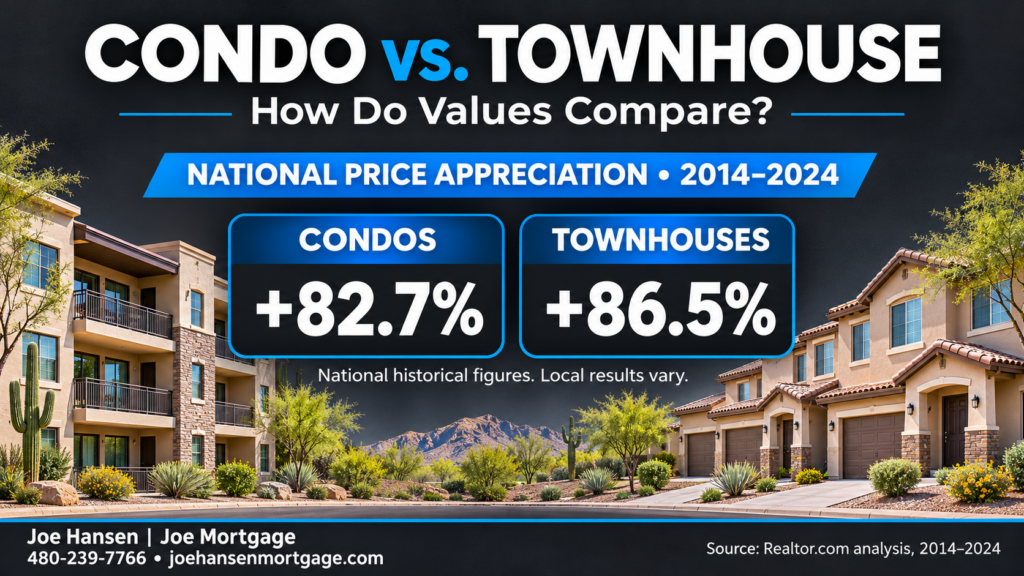
That doesn’t make condos a bad purchase. Many are well run and sell quickly, and a good one in a good location can do very well. But a condo carries a layer of risk tied to the association, and you should price that in. There’s no rule that townhouses always appreciate faster, and comparing sales of similar properties in the same neighborhood will tell you more than the label will.
Compare total monthly cost, not just price. A $250,000 condo with a $400 monthly HOA fee can cost more each month than a slightly pricier townhouse with a small fee. Unusually low dues can also be a warning sign that reserves are thin.
A checklist for realtors and first-time buyers
Before an offer, I’d find out:
- Is the property a condominium or a fee-simple townhouse or patio home? Ask your loan officer to verify it from the recorded documents.
- If it’s a condo, is the project FHA approved (and current) or VA accepted, if either applies?
- Will it likely pass a current Fannie Mae or Freddie Mac review?
- What do the HOA dues cover, and are any special assessments pending?
- Does the association have healthy reserves, adequate insurance, and no big litigation?
- Could the financing picture make it harder for the next buyer?
Buyers new to all this should also read my first-time buyer guide for Arizona. If you’re debating timing, should you buy in Peoria now or wait until 2027 covers that. And because I’m a broker who can compare lenders, a condo that one lender won’t touch sometimes works at another. If you’re interviewing lenders, here’s how to choose the right mortgage broker in Arizona.
Reach out to me before you write the offer
Realtors: if your buyer is looking at an attached home, a patio home, or anything with “townhouse-style” in the listing, send me the address. I’ll research what it is and tell you what it means for FHA, VA, or conventional financing, so there are no surprises in escrow.

Buyers: if you’ve found a place you like, call me before you get attached. I can check the property type, look up the project’s approval status, and tell you whether your loan program will work, all before you write an offer. Call 480-239-7766 or reach out through my website, and include the address or a link to the listing.
Frequently asked questions
How do I know if an Arizona property is a condo or a townhouse?
Don’t go by how it looks or how it’s listed. The legal description, county assessor record, plat, deed, and declaration decide it. A title company or loan officer can confirm it for you. Does a patio home count as a condo?
Not automatically. Some patio homes are fee-simple lots and some are condominium units. The recorded documents settle it, which is why research matters so much in Sun City. Where can I check whether a condo is FHA approved?
Use HUD’s FHA condominium search. Confirm the status is Approved and not Expired. If it isn’t approved, ask your lender whether Single-Unit Approval is possible. What is a non-warrantable condo?
It’s a condo project that doesn’t meet Fannie Mae or Freddie Mac guidelines, often because of litigation, low reserves, insurance problems, or too many investor-owned units. Loans on these are usually limited to specialty lenders and can mean bigger down payments and higher rates. Can a condo fail conventional financing even if I qualify?
Yes. Fannie Mae and Freddie Mac review the whole project, including reserves, insurance, and litigation. A project can fail even when the buyer is strong.
Not sure what you’re looking at?
Send me the address. I’ll research whether it’s a condo, townhouse, or patio home and what that means for your loan, before you write an offer.480-239-7766
Joe Hansen | Joe Mortgage
Precision Mortgage · 14155 N 83rd Ave Ste 125, Peoria, AZ 85381
joehansenmortgage.com
Joe Hansen, NMLS# 217716, AZ LO0911403. Precision Mortgage. This article is general information, not a commitment to lend. Guidelines change, and approval depends on the borrower, property, and program. Equal Housing Opportunity.
