
Reverse Mortgages in Sun City West, AZ: What Homeowners 62+ Need to Know
You’ve built equity in your Sun City West home for years. A reverse mortgage may let you access that equity on your terms — without selling, without monthly payments, and without giving up ownership. Here’s the honest story on how it works. By Joe Hansen, NMLS# 217716 · Precision Mortgage, Peoria AZ · Updated 2026
Sun City West homeowners have something most people spend a lifetime working toward: real equity in a home they love, in a community built around actually enjoying retirement. A reverse mortgage gives eligible homeowners 62 and older a way to tap into that equity — as a lump sum, a monthly payment, or a growing line of credit — without selling the home or taking on a required monthly mortgage payment. This guide explains exactly how it works, what it costs, and how to determine whether it’s the right move for your situation. 62+ Minimum age to qualify for a HECM reverse mortgage $0 Required monthly mortgage payments with a HECM Non-Recourse You never owe more than the home’s value at sale
Why Sun City West Is One of the Best Places to Consider a Reverse Mortgage
Not every community is equally well-suited to the reverse mortgage conversation. Sun City West is. Here’s why.

Sun City West was developed by Del Webb and opened in 1978 as an expansion of the original Sun City community — and it was built from the ground up with active adult living as the entire purpose. The community is age-restricted to residents 55 and older, which means the people who live here made a deliberate choice about their lifestyle. They chose community, activity, and quality of life over proximity to a job. That intentionality doesn’t stop at the front door — it extends to financial decisions too.
Sun City West features four recreation centers, nine golf courses, and nine on-site restaurants. The R.H. Johnson Center alone spreads over 48 acres and contains 118,000 square feet of amenities under one roof — the largest activity center in Arizona. All residents pay a mandatory annual fee to the Recreation Centers of Sun City West to support the cost of running and maintaining these amenities — there are no traditional HOA fees for standard homes. That annual fee is predictable, manageable, and something we account for when evaluating whether a reverse mortgage makes sense in your specific budget.
Many Sun City West homeowners have lived here for ten, fifteen, or twenty-plus years. They’ve watched their home values appreciate. They’ve paid down their mortgages — or paid them off entirely. And now they’re sitting on significant equity that’s doing nothing except existing on paper. A reverse mortgage changes that equation.
Palm Ridge Recreation Center
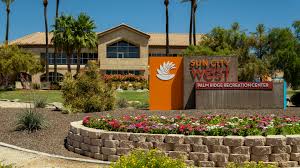
The Palm Ridge Center features three pools — one outdoor and two indoor — plus a large fitness center, tennis courts, pickleball, an indoor walking track, a ballroom, and clubrooms. For many residents, Palm Ridge is where mornings start — a swim, a walk on the track, coffee with neighbors before the day gets going. It’s the kind of facility that makes you understand why people who move to Sun City West for a winter tend to sell their other home and stay permanently.
When clients ask me whether their Sun City West home is a good long-term hold — relevant to any reverse mortgage conversation — the answer almost always yes. Communities built around amenities like this retain residents, maintain property values, and keep demand steady. That matters when we’re talking about equity. Sun City West Spotlight
Beardsley Recreation Center
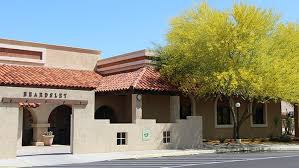
The Beardsley Center features an Olympic-size indoor pool, fitness center, club rooms, a mini-golf course, horseshoes, a greenhouse, and a park with shady ramadas. Beardsley also hosts community events like the Spring Fest concert series and the annual Sun City West Pickleball Ball Drop — the kind of events that make this feel less like a neighborhood and more like a community in the truest sense of the word.
For homeowners considering a reverse mortgage, this level of community infrastructure is worth keeping in mind. Staying in your Sun City West home doesn’t just preserve your equity — it preserves your lifestyle.
What Is a Reverse Mortgage?
A reverse mortgage is a loan that allows homeowners 62 and older to convert a portion of their home equity into usable funds — without selling the property and without making a required monthly mortgage payment. The most widely used type is the Home Equity Conversion Mortgage (HECM), which is insured by the federal government through the U.S. Department of Housing and Urban Development (HUD).
Unlike a traditional mortgage — where you make payments to reduce your loan balance over time — a reverse mortgage works in the opposite direction. The lender provides funds to you, and the loan balance grows over time as interest accrues. The loan is repaid when the last borrower permanently leaves the home: through a sale, a move to a long-term care facility, or death. At that point, the home is typically sold, the loan is repaid from the proceeds, and any remaining equity goes to you or your heirs.
The critical point that most people misunderstand: you retain ownership of your home throughout the life of the loan. The lender does not take title. You are still the owner — responsible for property taxes, insurance, and maintenance — just without a required monthly mortgage payment to make.
For a deeper look at how HECMs work across Arizona, read our full reverse mortgage guide here.
Who Qualifies in Sun City West?
The basic eligibility requirements for a HECM are straightforward, and most Sun City West homeowners who are interested will meet them:Age 62 or older. All borrowers on title must meet this requirement. Sun City West’s 55+ age restriction means the community itself exceeds the minimum — most residents applying for a reverse mortgage are in their late 60s, 70s, or 80s. The home must be your primary residence. You must live in the home as your primary residence — not a vacation property or second home. For Sun City West residents who have made this their year-round home, this is not an obstacle. Significant equity or outright ownership. You don’t have to own the home free and clear, but you must have enough equity to pay off any existing mortgage balance at closing using reverse mortgage proceeds. Many Sun City West homeowners have paid off their mortgages entirely, making this a non-issue. Current on federal obligations. No delinquent federal debt — student loans, federal taxes, and similar obligations must be current. HUD-approved counseling session. Before applying, all borrowers must complete an independent session with a HUD-approved reverse mortgage counselor. This is not a formality — it’s a genuine third-party review of the loan and your options, conducted by someone who has no financial stake in whether you proceed. Sessions are typically available by phone and take about an hour. What About Condos?
Some Sun City West properties are condominiums rather than standard single-family homes. HECM reverse mortgages are available for condos — but only those on HUD’s approved condo list. If your Sun City West property is a condo and you’re exploring a reverse mortgage, this is the first thing I’ll verify. It doesn’t disqualify you, but it does affect the process, and it’s worth knowing upfront.
How You Receive Your Funds
One of the most important decisions in a reverse mortgage is how you structure the payout. There are four primary options, and the right one depends entirely on your goals: Lump Sum Receive all available funds at closing. This comes with a fixed interest rate. Best for borrowers who need a large amount immediately — to pay off an existing mortgage, cover a major expense, or consolidate debt. Monthly Payments Receive equal monthly payments for a set term or for as long as you live in the home. Creates a steady income stream that supplements Social Security, pensions, or investment distributions. Line of Credit Access funds as needed, up to your available principal limit. The unused portion grows over time — a unique feature no other credit product offers. Gives you a financial safety net without obligating you to draw on it. Combination Many borrowers take a partial lump sum at closing — to pay off a remaining mortgage balance — and then maintain the rest as a growing line of credit for future use. Often the most flexible approach. The Growing Line of Credit — A Feature Worth Understanding
The line of credit option has a feature that surprises most people when they first learn about it: the unused portion of the credit line grows over time at the same rate the loan accrues interest. This means a borrower who establishes a $200,000 HECM line of credit today and doesn’t draw on it will have access to more than $200,000 in five years — regardless of whether their home’s market value has changed.
No traditional home equity line of credit or savings account works this way. For retirement planning purposes, a HECM line of credit established early — even before you need it — can become a significantly more valuable resource over time. It’s one of the most compelling arguments for setting up a reverse mortgage proactively rather than waiting until you’re in financial need.
What Does a Reverse Mortgage Cost?
Transparency on costs is non-negotiable. Reverse mortgages do carry fees, and understanding them is part of making an informed decision. Here’s what you’ll encounter: Upfront Mortgage Insurance Premium (MIP): 2% of the appraised home value (or the HUD lending limit, whichever is less). This is federal insurance that protects you — if the lender fails or the loan balance ever exceeds the home’s value at sale, the insurance covers the difference. Your heirs never owe more than the home is worth. Annual MIP: 0.5% of the outstanding loan balance, accrued annually. This is added to the loan balance — not paid out of pocket. Origination Fee: Capped by HUD — typically up to $6,000 depending on home value. Can often be negotiated or offset by lender credits. Closing Costs: Standard costs — appraisal, title, recording fees — similar to any other mortgage. Generally $2,000–$5,000 depending on the property and lender. Ongoing Interest: Accrues on the outstanding loan balance over time. The rate can be fixed (lump sum only) or adjustable (line of credit, monthly payments).
The majority of these costs can be financed into the loan itself — meaning most borrowers pay little to nothing out of pocket at closing. We’ll provide a full cost breakdown as part of any HECM evaluation so you can see the true long-term picture before you make any decision. Total Annual Loan Cost (TALC)
Federal regulations require lenders to disclose the Total Annual Loan Cost — a single percentage that accounts for all fees and interest over the projected life of the loan. This TALC disclosure is designed to make it easier to compare reverse mortgage offers apples-to-apples. I’ll walk you through what it means and how to read it before you sign anything.
What You Must Stay On Top Of
A reverse mortgage is not a set-it-and-forget-it product. There are ongoing obligations that every borrower needs to understand clearly before proceeding — and this is where I spend a significant portion of our initial conversation. The Most Important Thing to Know
The most common reason a reverse mortgage becomes due unexpectedly — or leads to foreclosure — is not the loan itself. It’s a borrower falling behind on property taxes or homeowner’s insurance. These obligations don’t go away with a reverse mortgage. If you’re not paying property taxes and keeping your insurance current, the lender can call the loan due. This is preventable — and we discuss it clearly upfront every time.Property taxes must be paid on time, every year. In Maricopa County, Sun City West homeowners benefit from relatively low property tax rates — but they still must be paid. Homeowner’s insurance must be maintained at all times. Primary residence requirement — if you move out of the home for more than 12 consecutive months (such as an extended stay in a care facility), the loan becomes due. Home maintenance — the property must be kept in reasonable condition. Significant deferred maintenance can trigger a call of the loan in extreme cases.
For borrowers who want the financial security of a reverse mortgage but are concerned about managing the tax and insurance obligations, there is a solution: a Life Expectancy Set-Aside (LESA). This is an arrangement where a portion of the reverse mortgage proceeds is set aside specifically to cover future property taxes and insurance — automatically, without the borrower having to manage those payments directly. Not every borrower needs one, but for the right situation it removes a significant source of risk.
Is a Reverse Mortgage Right for You?
The honest answer is: it depends. A reverse mortgage is genuinely the right tool for some Sun City West homeowners, and genuinely the wrong tool for others. Here’s how I think about it:
A reverse mortgage tends to make strong sense when:
You plan to stay in your Sun City West home long-term. The longer you’re in the home, the more the loan’s costs are spread over time — and the more value you extract from the program. You want to eliminate an existing mortgage payment. Taking a reverse mortgage lump sum to pay off a remaining conventional mortgage can meaningfully improve monthly cash flow in retirement. You want a financial buffer without drawing down investments. A growing HECM line of credit established early gives you a reserve you can access when needed — rather than selling investments at an inopportune time. You have significant equity but limited liquid assets. Your home equity is your largest asset — a reverse mortgage lets you use it without giving up the home.
A reverse mortgage may not be the right fit when:
You plan to move within a few years. The upfront costs don’t make as much sense over a short timeline. If a move is likely within three to five years, other options may work better. Leaving the home to heirs is a top priority. A reverse mortgage reduces the equity available to pass on. That’s not necessarily a deal-breaker, but it’s a real consideration — and one to discuss openly with family. You have a non-borrowing spouse under 62 on title. This adds complexity that needs careful structuring to protect the younger spouse’s right to remain in the home.
If you’re not sure where you fall, that’s exactly what an initial conversation is designed to determine. As a mortgage broker serving Sun City and surrounding communities, I can look at your specific equity position, income picture, and goals and give you a straight answer on whether this makes sense for you — without pressure in any direction.
Why Working with a Local Broker Matters
Reverse mortgages are not a product that every lender handles well. Some institutions treat them as a niche product they barely understand. Others use high-pressure sales tactics that don’t serve the borrower’s best interests. The quality of the guidance you receive during this process matters enormously — because the decisions made at the outset affect the loan’s performance for decades.
As a local mortgage broker in Arizona, I work with multiple lenders and have access to more than one institution’s reverse mortgage products. That means I can compare terms, origination fees, and rate structures across lenders — rather than being limited to a single institution’s offering. It also means I can be direct with you about whether a reverse mortgage is genuinely the best option for your situation, or whether a different approach — a HELOC, a traditional cash-out refinance, or other loan options — would serve you better.
You’re not calling a call center. You’re working with someone who is licensed in Arizona, knows the West Valley market, and has had this exact conversation with Sun City and Sun City West homeowners many times. The goal is to give you the clearest possible picture of your options and help you make the decision that’s right for your specific situation — not the one that closes the most quickly or earns the most commission.
Want to Know What You’d Qualify For?
I’ll walk through your home’s equity, your age, and your goals — and give you a realistic picture of what a reverse mortgage would look like for your specific situation. No pressure, no obligation, and no sales pitch. Just a straight conversation.(480) 239-7766 — Call JoeSun City Services →
Frequently Asked Questions
Will a reverse mortgage affect my Social Security or Medicare benefits? Reverse mortgage proceeds are considered loan advances — not income — so they generally do not affect Social Security or Medicare benefits. However, if proceeds are deposited into a bank account and not spent in the same month they’re received, they can potentially affect Medicaid eligibility. If Medicaid is a current or future consideration for you, consult with an elder law attorney before proceeding.
What happens to my home when I pass away?
Your heirs have options. They can sell the home, repay the loan balance, and keep any remaining equity. They can also choose to refinance the loan into a traditional mortgage and keep the property. Because HECM reverse mortgages are non-recourse loans, your estate will never owe more than the home’s appraised value at the time of sale — even if the loan balance is higher. Any shortfall is covered by the federal mortgage insurance the loan carries.
My spouse is under 62 — can we still get a reverse mortgage?
Yes, but it requires careful structuring. The younger spouse can be designated as a “non-borrowing spouse,” which — if properly documented — allows them to remain in the home after the borrowing spouse passes away or moves to a care facility, without the loan being called due. The loan amount is based on the younger spouse’s age, which reduces the available principal. This is a situation where the structuring details matter a great deal, so it warrants a thorough conversation upfront.
Can I use a reverse mortgage to buy a home in Sun City West?
Yes. The HECM for Purchase (H4P) program allows eligible buyers to purchase a new primary residence using a reverse mortgage. This is particularly useful for buyers who want to downsize into Sun City West — using proceeds from the sale of a prior home as a partial payment, and covering the remainder with a reverse mortgage that requires no monthly payments on the new property. It’s an underutilized option worth understanding if you’re planning a move.
How long does the reverse mortgage process take?
From application to closing, HECM reverse mortgages typically take 30–45 days. The HUD counseling session is the first step and can usually be scheduled within a week. Appraisal, underwriting, and title work follow. There is also a mandatory 3-business-day right of rescission after signing — a cooling-off period during which you can cancel without penalty.
Is the interest on a reverse mortgage tax deductible?
Interest on a reverse mortgage is not deductible until it is actually paid — which typically doesn’t happen until the loan is repaid. At that point, heirs or the estate may be able to deduct it, but this varies by situation. As always, consult a qualified tax advisor for guidance specific to your circumstances.
Helpful Resources
- Reverse Mortgages Explained — Full Arizona Guide
- Mortgage Broker in Sun City, AZ — All Loan Programs
- All Loan Options — Joe Hansen Mortgage
- How to Choose the Right Mortgage Broker in Arizona
- HUD HECM Reverse Mortgage Information — HUD.gov
- Recreation Centers of Sun City West — Official Site
- CFPB Reverse Mortgage Guide for Consumers
Joe Hansen Mortgage Loan Officer · NMLS# 217716 · AZ LO0911403
Joe Hansen is a licensed mortgage loan officer and broker at Precision Mortgage in Peoria, AZ with over 20 years of experience helping Arizona homeowners navigate their mortgage options. He serves clients throughout Sun City West, Sun City, Peoria, Glendale, Surprise, and the broader West Valley — specializing in reverse mortgages, VA loans, FHA, conventional, and down payment assistance programs.joehansenmortgage.com(480) 239-7766Reverse Mortgage Guide
